SOC 4174 Contemporary Rural Society
Instructor: Geethika Dharmasinghe Classroom: SOC 294
g.dharmasinghe@soc.cmb.ac.lk Class Times: Mon. 11-12pm, Tues. 8-10am
Office: 630. TA:
Office Hours: TU 10-12pm or by appointment.
Course Description
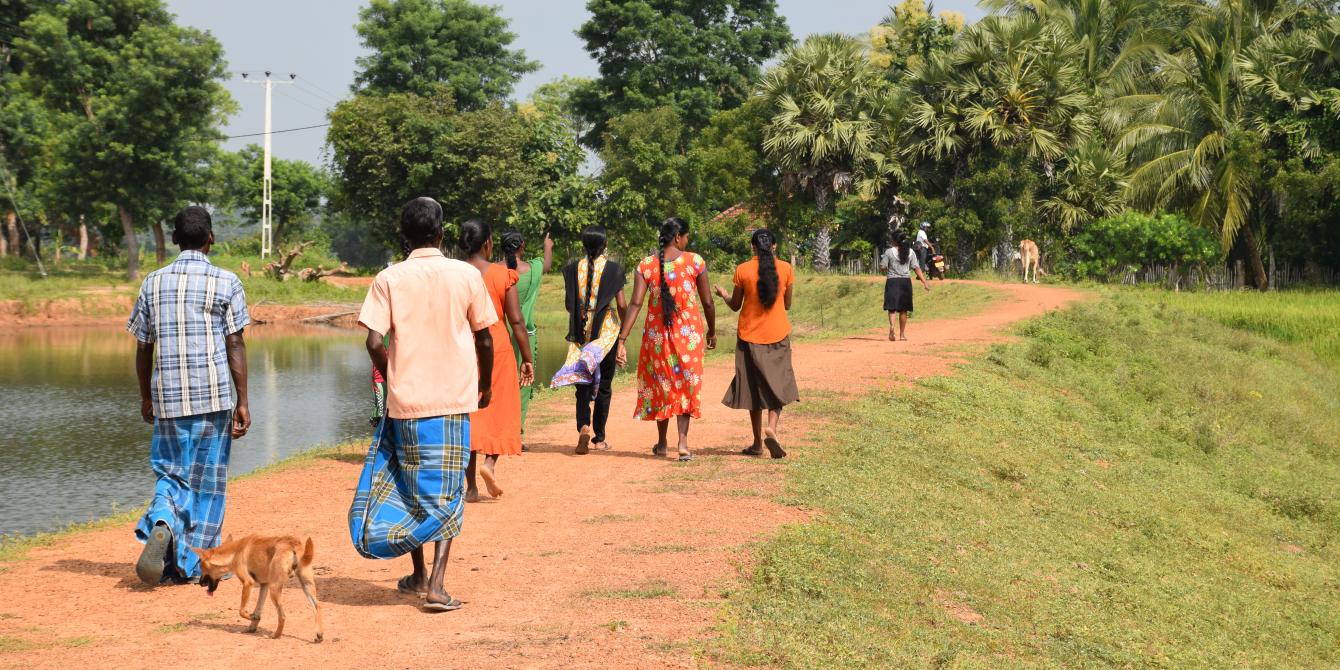
Urban rural divide is gradually losing its significance due to national, international and global tendencies. Contemporary rural societies have undergone many changes in demographic, economic, social and political terms. Yet, rural societies continue to have some of their own peculiarities and identities that are of a sociological significance. This course will guide students through relevant literature, focusing primarily on Sri Lanka and India.
Course Objectives
Develop a comprehensive understanding of the transformative changes occurring in rural societies.
Explore and analyze prevalent social issues within rural communities.
Familiarize oneself with theoretical frameworks for examining and interpreting rural societies.
Readings
There are no books to be purchased for this course. All readings are book chapters and journal articles that can be downloaded from the course page on LMS under the “Week Module” folder. Required films can be watched on your computer from the course under the “Week Module” folder.
Grading-Labor Contract
This course will be taught on two tracks. Background material on theoretical categories such as rurality, culture, and integration will be presented in lectures, while discussions will focus on the readings. Attendance at lectures is required. Please bring the relevant text to each discussion.
Attendance 5%: This portion of your grade will depend on your contribution to the class environment and will be assessed based on your engagement with lectures and discussion sessions. This means: engagement in discussions, presentations, listening to your peers and incorporating/building off their insights in your own comments, being prepared for class and formulating questions about the readings and lectures. Regular attendance at the standard class meetings. In other words, attendance at all classes is expected. Each student is entitled to up to 2 vacation/sick days (a week!). Use them as you wish, but be mindful of the fact that you are not entitled to be absent beyond these two days for any reason other than one conveyed to me by the University administration. I recommended saving these days for later in the semester when you will be busy and/or sick. Absence for more than two classes will result in losing this portion of your grade.
Reading Responses (RR) 15%: Submit 300-word reading responses 8 times during the semester. These should engage with the assigned readings and may follow one of two formats, or a combination of both.
a. Identify a “golden line” or quotation that you believe is significant and reflects the
author's major point(s). You will then note why it is an important point (contextualize it), and finally raise any comments, questions, or disagreements with the author that you may have.
b. Alternately, you can structure your response around a challenging question, very brief personal story, or a visual that you are reminded of (e.g. photograph). You should show how you understand the author’s main arguments or points, and what you find provocative, challenging, difficult, or affirming. What do the readings and your story, question or visual inspire you to do or think about?
RRs are preparation for discussion, not freestanding assignments. Always bring the relevant text to discussion. The response needs to engage with the readings and ask an analytical (not yes/no) question. It must end with a question that can generate productive conversations. It is necessary to demonstrate through your response that you have read/watched and understood the material assigned.
Mid-term (5-pp.): 20% : Comparative Essay Prompt will be provided during the 6th week.
Final exam: 60%
Course Schedule (Subject to Modification)
Week 1: Introduction/Syllabus/Class Schedule
(6/11-12) Introduction to Rural Society
Week 2: Agrarian Studies in Sociology: The Origin of Rural Sociology
(5/18-19) Buttel, F. H. 2001. Rural Sociology. In Knowledge, Sociology of International
Encyclopedia of the Social and Behavioral Sciences. Knowledge, Sociology of. eds. Smelser, Neil J. and Paul B. Baltes. Vol. 12: 13429-13433.
https://www.encyclopedia.com/social-sciences/applied-and-social-sciences-magazines/rural-society
Week 03: Agrarian Question
(5/25-26) Reading Response [RR 01]: Agrarian Question. Mohanty. BB. eds. 2016.
Introduction. In Critical Perspectives on Agrarian Transition. India in the Global Debate. Pp.1-40. New York: Routledge.
Optional Reading: https://www.encyclopedia.com/social-sciences/applied-and-social-sciences-magazines/rural-society.
Transformation of Sri Lanka’s Agrarian Structure
Week 04: (6/1-2) Reading Response [RR 02]: Shanmugaratnam, N. 1985. Colonial Agrarian Changes and Underdevelopment. In Capital and Peasant Production: Studies
in the Continuity and Discontinuity of Agrarian Structures in Sri Lanka. Charles Abeysekera, ed. Pp. 1-21. Colombo: Social Scientists’ Association of Sri Lanka.
Week 05: (6/8-9) Reading Response [RR 03]: Gunasinghe, Newton. 1996. Agrarian Relations in the Kandyan Countryside in Relation to the Concept of
Extreme Social Disintegration. In Newton Gunasinghe: Selected Essays. Sasanka Perera, ed. Pp. 74-109. Colombo: Social Scientists’ Association of Sri Lanka.
Week 06: Reading: Jayawardena, Kumari., 2000. Introduction. Nobodies to Somebodies. (6/15-16) Colombo: Social Scientist Association.
In class: Watch Baddegama
In your own time: A Panjabi Village
A Village in India
Peaceful Sri Lanka
Workshop: Analyzing an Article
Week 07: Agrarian Change and the State
(6/22-23) Reading Response [RR 04]: Brow, James. 1992. Agrarian Change and The
Struggle for Community in Kukulewa, Anuradhapura District. In Agrarian Change in Sri Lanka. James Brow and Joe Weeramunda, eds. Pp. 261-292. New Delhi: Sage Publishers.
Week 08: The State and the Peasant Ideology
(6/29-30) Moore, Mick. 1989. The Ideological History of the Sri Lankan 'Peasantry'. Modern Asian Studies. Vol. 23 (1): 179-207.
Mid-term Due
Week 09: The Role of Kinship and Caste in Rural Societies
(7/6-7) Reading Response [RR 05]: Tudor Silva, Kalinga. 1992. Capitalist
Development, Rural Politics and Peasant Agriculture in Highland Sri Lanka: Structural Change in a Low Caste Village. In Agrarian Change in Sri Lanka. James Brow and Joe Weeramunda, eds. Pp. 63-94. New Delhi: Sage Publishers.
The Evolution of Villages in Sri Lanka
Week 10: Settlements in Rural Societies
(7/13-14) Reading Response [RR 06]: Wickramasekera, Piyasiri. 1985. The Mahaweli
Development Programme, Agrarian Change and the Peasantry. In Capital and Peasant Production: Studies in the Continuity and Discontinuity of Agrarian Structures in Sri Lanka. ed., Charles Abeysekera. Pp. 83-95. Colombo: Social Scientists’ Association of Sri Lanka.
Optional Reading: Kelegama, Thiruni and Korf, Benedikt. 2023. Peasant Politics, Frontier Colonization and the Cunning State in Sri Lanka The lure of land. Modern Asian Studies, Vol.57 (6). https://sangam.org/peasant-politics-frontier-colonization-and-the-cunning-state-in-sri-lanka/
Week 11: Land Tenure, Kinship and Land
(7/20-21) Reading Response [RR 07]: Moore, Mick. 1985. Land Reform. In The
State and Peasant Politics in Sri Lanka. Pp.50-85. London: Cambridge University Press.
Week 12: Changes in Sri Lankan Rural Economy
(7/27-28) Reading Response [RR 08]: de Silva, S. B. D. 1985. Plantation and Underdevelopment. In Capital and Peasant Production. Studies in the Continuity and Discontinuity of Agrarian Structures in Sri Lanka. Charles Abeysekera. ed. Pp. 21-33. Colombo: Social Scientists’ Association.
Guest Lecture: Shiran Illanperuma
Week 13: Social Change in Rural Sri Lanka
(8/3-4) Reading Response [RR 09]: Barrie M. Morrison, M.P. Moore, and M.U. Ishak Lebbe. eds. 1979. Introduction. In The Disintegrating Village: Social Change in Rural Sri Lanka. Pp. 1-42. Colombo: Lake House Investments LTD.
Week 14: Gam Udawa: Rural Community and the State
(8/10-11) Reading Response [RR 10]: Woost, Michael. 1993. On the Road to
Wellassa: The Changing ‘State’ of the Frontier. Pravada. Pp. 27-29.
Guest Lecture: Prof. Pradeep Jeganathan
Optional Reading: Woost, Michael. 1993. Nationalizing the Local Past in Sri Lanka: Histories of Nation and Development in a Sinhalese Village American Ethnologist, Vol. 20 (3): 502-521.
- ගුරුවරයා: Geethika Dharmasinghe
- ගුරුවරයා: Thisari Jayathunga